•  
Rare Moment of An Orangutan Hanging From A Tree - Sumatra

Rare Moment of An Orangutan Hanging From A Tree - Sumatra

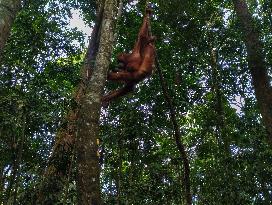
An orangutan, positioned in a tree adjacent to the Head of the LPS I Medan Representative Office, Muhamad Yusron, utilised a smartphone to document a unique occasion during a media gathering held in the Gunung Leuser National Park (TNGL) forest area in Bukit Lawang, Langkat, North Sumatra, Indonesia, on December 11, 2025. This event, centred on conservation, underscored LPS's commitment that extends beyond ensuring financial stability in the wake of disasters and crises; it also incorporates a deep concern for ecological sustainability. A robust banking framework is anticipated to facilitate both sustainable economic development and environmental restoration, fostering a balance among human activity, natural ecosystems, and economic growth in Sumatra. Photo by Aditya Sutanta/ABACAPRESS.COM

  •  
Rare Moment of An Orangutan Hanging From A Tree - Sumatra

Rare Moment of An Orangutan Hanging From A Tree - Sumatra

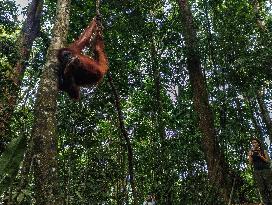
An orangutan, positioned in a tree adjacent to the Head of the LPS I Medan Representative Office, Muhamad Yusron, utilised a smartphone to document a unique occasion during a media gathering held in the Gunung Leuser National Park (TNGL) forest area in Bukit Lawang, Langkat, North Sumatra, Indonesia, on December 11, 2025. This event, centred on conservation, underscored LPS's commitment that extends beyond ensuring financial stability in the wake of disasters and crises; it also incorporates a deep concern for ecological sustainability. A robust banking framework is anticipated to facilitate both sustainable economic development and environmental restoration, fostering a balance among human activity, natural ecosystems, and economic growth in Sumatra. Photo by Aditya Sutanta/ABACAPRESS.COM

  •  
Southern Europe and The Northwestern Mediterranean Coast from The ISS

Southern Europe and The Northwestern Mediterranean Coast from The ISS

Handout - JAXA (Japan Aerospace Exploration Agency) astronaut Kimiya Yui captured this photo of southern Europe and the northwestern Mediterranean coast from the International Space Station as it orbited 261 miles above Earth on August 30, 2025. At left, the Po Valley urban corridor in Italy shines with the metropolitan areas of Milan and Turin and their surrounding suburbs. Crew members aboard the orbital lab have produced hundreds of thousands of images of the land, oceans, and atmosphere of Earth, and even of the Moon through Crew Earth Observations. Their photographs of Earth record how the planet changes over time due to human activity and natural events. This allows scientists to monitor disasters and direct response on the ground and study a number of phenomena, from the movement of glaciers to urban wildlife. Photo by JAXA/Kimiya Yui/NASA via ABACAPRESS.COM

  •  
New DEEP Sea Underwater Habitat Announced

New DEEP Sea Underwater Habitat Announced

Handout render of DEEP Sentinel seafloor scene. A new deep-sea habitat project has been launched by ocean technology and exploration company, DEEP, which has announced its intention to create a permanent human presence under the oceans by 2027. The project is already two years in development, with its base located at the former British National Diving and Activity Centre (NDAC), an 80m-deep, 600m-long flooded quarry in Gloucester, England, which suddenly announced its closure in February 2022. The centrepiece of DEEP’s project is Sentinel, a customisable capsule system designed to be ‘modular, scalable, autonomous, recoverable, re-configurable and re-deployable.’ Sentinel can be tailored to the individual needs of its users, be that a single installation or a network of segments interlinked to form a ‘deep-sea village’, and DEEP claims it will be installed on the sea floor with minimum disturbance to the surrounding ecosystem. Built using an innovative construction method employing robotic welding arms, which

  •  
New DEEP Sea Underwater Habitat Announced

New DEEP Sea Underwater Habitat Announced

Handout render of DEEP Sentinel interior detail diagram. A new deep-sea habitat project has been launched by ocean technology and exploration company, DEEP, which has announced its intention to create a permanent human presence under the oceans by 2027. The project is already two years in development, with its base located at the former British National Diving and Activity Centre (NDAC), an 80m-deep, 600m-long flooded quarry in Gloucester, England, which suddenly announced its closure in February 2022. The centrepiece of DEEP’s project is Sentinel, a customisable capsule system designed to be ‘modular, scalable, autonomous, recoverable, re-configurable and re-deployable.’ Sentinel can be tailored to the individual needs of its users, be that a single installation or a network of segments interlinked to form a ‘deep-sea village’, and DEEP claims it will be installed on the sea floor with minimum disturbance to the surrounding ecosystem. Built using an innovative construction method employing robotic welding ar

  •  
New DEEP Sea Underwater Habitat Announced

New DEEP Sea Underwater Habitat Announced

Handout render of DEEP Sentinel full system scene. A new deep-sea habitat project has been launched by ocean technology and exploration company, DEEP, which has announced its intention to create a permanent human presence under the oceans by 2027. The project is already two years in development, with its base located at the former British National Diving and Activity Centre (NDAC), an 80m-deep, 600m-long flooded quarry in Gloucester, England, which suddenly announced its closure in February 2022. The centrepiece of DEEP’s project is Sentinel, a customisable capsule system designed to be ‘modular, scalable, autonomous, recoverable, re-configurable and re-deployable.’ Sentinel can be tailored to the individual needs of its users, be that a single installation or a network of segments interlinked to form a ‘deep-sea village’, and DEEP claims it will be installed on the sea floor with minimum disturbance to the surrounding ecosystem. Built using an innovative construction method employing robotic welding arms, wh

  •  
New DEEP Sea Underwater Habitat Announced

New DEEP Sea Underwater Habitat Announced

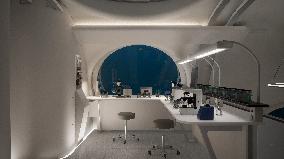
Handout render of DEEP Sentinel dry lab. A new deep-sea habitat project has been launched by ocean technology and exploration company, DEEP, which has announced its intention to create a permanent human presence under the oceans by 2027. The project is already two years in development, with its base located at the former British National Diving and Activity Centre (NDAC), an 80m-deep, 600m-long flooded quarry in Gloucester, England, which suddenly announced its closure in February 2022. The centrepiece of DEEP’s project is Sentinel, a customisable capsule system designed to be ‘modular, scalable, autonomous, recoverable, re-configurable and re-deployable.’ Sentinel can be tailored to the individual needs of its users, be that a single installation or a network of segments interlinked to form a ‘deep-sea village’, and DEEP claims it will be installed on the sea floor with minimum disturbance to the surrounding ecosystem. Built using an innovative construction method employing robotic welding arms, which will d

  •  
New DEEP Sea Underwater Habitat Announced

New DEEP Sea Underwater Habitat Announced

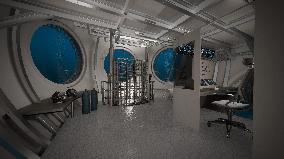
handout artists' impression of one of the bedrooms in a typical configuration of DEEP's Sentinel System. Each room enjoys the view through a huge viewport overhead, and lots of space for personal items and storage. A touchscreen device may be used for communications and entertainment. A new deep-sea habitat project has been launched by ocean technology and exploration company, DEEP, which has announced its intention to create a permanent human presence under the oceans by 2027. The project is already two years in development, with its base located at the former British National Diving and Activity Centre (NDAC), an 80m-deep, 600m-long flooded quarry in Gloucester, England, which suddenly announced its closure in February 2022. The centrepiece of DEEP’s project is Sentinel, a customisable capsule system designed to be ‘modular, scalable, autonomous, recoverable, re-configurable and re-deployable.’ Sentinel can be tailored to the individual needs of its users, be that a single installation or a network of segme

  •  
New DEEP Sea Underwater Habitat Announced

New DEEP Sea Underwater Habitat Announced

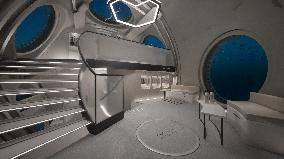
Handout render of DEEP Sentinel great hall. A new deep-sea habitat project has been launched by ocean technology and exploration company, DEEP, which has announced its intention to create a permanent human presence under the oceans by 2027. The project is already two years in development, with its base located at the former British National Diving and Activity Centre (NDAC), an 80m-deep, 600m-long flooded quarry in Gloucester, England, which suddenly announced its closure in February 2022. The centrepiece of DEEP’s project is Sentinel, a customisable capsule system designed to be ‘modular, scalable, autonomous, recoverable, re-configurable and re-deployable.’ Sentinel can be tailored to the individual needs of its users, be that a single installation or a network of segments interlinked to form a ‘deep-sea village’, and DEEP claims it will be installed on the sea floor with minimum disturbance to the surrounding ecosystem. Built using an innovative construction method employing robotic welding arms, which wil

  •  
New DEEP Sea Underwater Habitat Announced

New DEEP Sea Underwater Habitat Announced

Handout render shows the typical layout of the Galley and dining area within Sentinel. it is not to be relied upon for technical or engineering accuracy. A new deep-sea habitat project has been launched by ocean technology and exploration company, DEEP, which has announced its intention to create a permanent human presence under the oceans by 2027. The project is already two years in development, with its base located at the former British National Diving and Activity Centre (NDAC), an 80m-deep, 600m-long flooded quarry in Gloucester, England, which suddenly announced its closure in February 2022. The centrepiece of DEEP’s project is Sentinel, a customisable capsule system designed to be ‘modular, scalable, autonomous, recoverable, re-configurable and re-deployable.’ Sentinel can be tailored to the individual needs of its users, be that a single installation or a network of segments interlinked to form a ‘deep-sea village’, and DEEP claims it will be installed on the sea floor with minimum disturbance to the

  •  
New DEEP Sea Underwater Habitat Announced

New DEEP Sea Underwater Habitat Announced

Handout render of DEEP Sentinel dive centre. A new deep-sea habitat project has been launched by ocean technology and exploration company, DEEP, which has announced its intention to create a permanent human presence under the oceans by 2027. The project is already two years in development, with its base located at the former British National Diving and Activity Centre (NDAC), an 80m-deep, 600m-long flooded quarry in Gloucester, England, which suddenly announced its closure in February 2022. The centrepiece of DEEP’s project is Sentinel, a customisable capsule system designed to be ‘modular, scalable, autonomous, recoverable, re-configurable and re-deployable.’ Sentinel can be tailored to the individual needs of its users, be that a single installation or a network of segments interlinked to form a ‘deep-sea village’, and DEEP claims it will be installed on the sea floor with minimum disturbance to the surrounding ecosystem. Built using an innovative construction method employing robotic welding arms, which wi

  •  
Two Years of Pelindo Transformations - Indonesia

Two Years of Pelindo Transformations - Indonesia

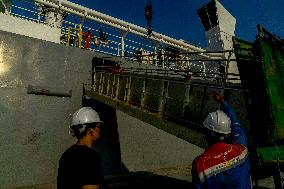
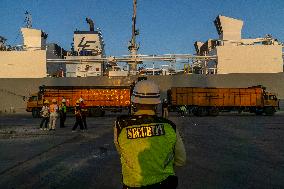
The process of loading cattle from Australia ahead of the Eid al-Fitr Mubarak as a productivity activity for the Indonesian economy is seen in silhouette at Belawan Harbor, Medan, North Sumatra, Indonesia on March 28, 2024. Vice President of Corporate Communications of PT Pelindo Multi Terminal Belawan, Farid Chairmawan said PT Pelindo Multi Terminal (SPMT), Subholding of PT Pelabuhan Indonesia (Persero) or Pelindo operates in the port segment in the field of non-container terminal operations in Indonesia. To provide superior services to service users, SPMT Group continues to be committed to transforming the 25 terminals at the ports it manages throughout Indonesia by referring to six pillars, business processes, human resources, technology, equipment, infrastructure and health, safety, security, and environment (HSSE). Pelindo is also carrying out standardization and digitalization starting from planning and control, as well as improving traffic flow so that loading and unloading activities can be maximized

  •  
Two Years of Pelindo Transformations - Indonesia

Two Years of Pelindo Transformations - Indonesia

The process of loading cattle from Australia ahead of the Eid al-Fitr Mubarak as a productivity activity for the Indonesian economy is seen in silhouette at Belawan Harbor, Medan, North Sumatra, Indonesia on March 28, 2024. Vice President of Corporate Communications of PT Pelindo Multi Terminal Belawan, Farid Chairmawan said PT Pelindo Multi Terminal (SPMT), Subholding of PT Pelabuhan Indonesia (Persero) or Pelindo operates in the port segment in the field of non-container terminal operations in Indonesia. To provide superior services to service users, SPMT Group continues to be committed to transforming the 25 terminals at the ports it manages throughout Indonesia by referring to six pillars, business processes, human resources, technology, equipment, infrastructure and health, safety, security, and environment (HSSE). Pelindo is also carrying out standardization and digitalization starting from planning and control, as well as improving traffic flow so that loading and unloading activities can be maximized

  •  
Two Years of Pelindo Transformations - Indonesia

Two Years of Pelindo Transformations - Indonesia

The process of loading cattle from Australia ahead of the Eid al-Fitr Mubarak as a productivity activity for the Indonesian economy is seen in silhouette at Belawan Harbor, Medan, North Sumatra, Indonesia on March 28, 2024. Vice President of Corporate Communications of PT Pelindo Multi Terminal Belawan, Farid Chairmawan said PT Pelindo Multi Terminal (SPMT), Subholding of PT Pelabuhan Indonesia (Persero) or Pelindo operates in the port segment in the field of non-container terminal operations in Indonesia. To provide superior services to service users, SPMT Group continues to be committed to transforming the 25 terminals at the ports it manages throughout Indonesia by referring to six pillars, business processes, human resources, technology, equipment, infrastructure and health, safety, security, and environment (HSSE). Pelindo is also carrying out standardization and digitalization starting from planning and control, as well as improving traffic flow so that loading and unloading activities can be maximized

  •  
XINHUA PHOTOS OF THE DAY

XINHUA PHOTOS OF THE DAY

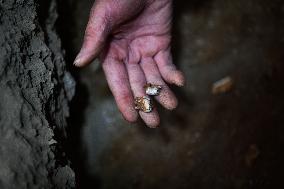
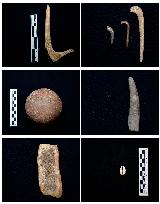
(240126) -- BEIJING, Jan. 26, 2024 (Xinhua) -- This photo taken on Jan. 24, 2024 shows archaeological samples unearthed from Chuandong Site in Puding County, southwest China's Guizhou Province. Large quantities of artifacts made of stone, bone and horn have been unearthed at Chuandong Site in Puding County, southwest China's Guizhou Province, indicating prehistoric human activity dating back more than 55,000 years. Chuandong Site, first discovered in 1978, is believed to have existed across the end of the middle Paleolithic Period, the late Paleolithic Period and the Neolithic Age. Over two years of excavation work, the third one since 1978, researchers discovered a new soil layer at the site, where they found more than 100,000 animal bones, over 10,000 pieces of earthenware and stoneware, and more than 2,500 items made of bone or horn. (Xinhua/Yang Wenbin)

  •  
CHINA-GUIZHOU-PUDING-CHUANDONG SITE-NEW FINDING (CN)

CHINA-GUIZHOU-PUDING-CHUANDONG SITE-NEW FINDING (CN)

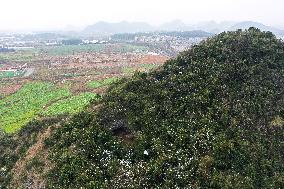
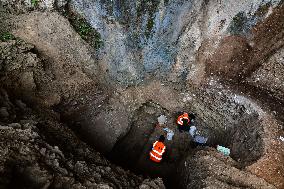
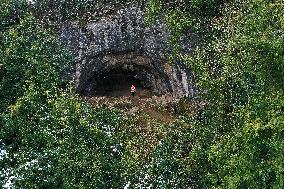
(240125) -- PUDING, Jan. 25, 2024 (Xinhua) -- An aerial drone photo taken on Jan. 24, 2024 shows a view of Chuandong Site in Puding County, southwest China's Guizhou Province. Large quantities of artifacts made of stone, bone and horn have been unearthed at Chuandong Site in Puding County, southwest China's Guizhou Province, indicating prehistoric human activity dating back more than 55,000 years. Chuandong Site, first discovered in 1978, is believed to have existed across the end of the middle Paleolithic Period, the late Paleolithic Period and the Neolithic Age. Over two years of excavation work, the third one since 1978, researchers discovered a new soil layer at the site, where they found more than 100,000 animal bones, over 10,000 pieces of earthenware and stoneware, and more than 2,500 items made of bone or horn. (Xinhua/Yang Wenbin)

  •  
CHINA-GUIZHOU-PUDING-CHUANDONG SITE-NEW FINDING (CN)

CHINA-GUIZHOU-PUDING-CHUANDONG SITE-NEW FINDING (CN)

(240125) -- PUDING, Jan. 25, 2024 (Xinhua) -- This combo photo taken on Jan. 24, 2024 shows archaeological samples unearthed from Chuandong Site in Puding County, southwest China's Guizhou Province. Large quantities of artifacts made of stone, bone and horn have been unearthed at Chuandong Site in Puding County, southwest China's Guizhou Province, indicating prehistoric human activity dating back more than 55,000 years. Chuandong Site, first discovered in 1978, is believed to have existed across the end of the middle Paleolithic Period, the late Paleolithic Period and the Neolithic Age. Over two years of excavation work, the third one since 1978, researchers discovered a new soil layer at the site, where they found more than 100,000 animal bones, over 10,000 pieces of earthenware and stoneware, and more than 2,500 items made of bone or horn. (Xinhua/Yang Wenbin)

  •  
CHINA-GUIZHOU-PUDING-CHUANDONG SITE-NEW FINDING (CN)

CHINA-GUIZHOU-PUDING-CHUANDONG SITE-NEW FINDING (CN)

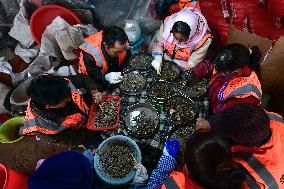
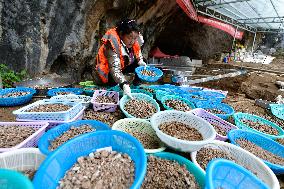
(240125) -- PUDING, Jan. 25, 2024 (Xinhua) -- Workers sort findings unearthed from Chuandong Site in Puding County, southwest China's Guizhou Province, Jan. 24, 2024. Large quantities of artifacts made of stone, bone and horn have been unearthed at Chuandong Site in Puding County, southwest China's Guizhou Province, indicating prehistoric human activity dating back more than 55,000 years. Chuandong Site, first discovered in 1978, is believed to have existed across the end of the middle Paleolithic Period, the late Paleolithic Period and the Neolithic Age. Over two years of excavation work, the third one since 1978, researchers discovered a new soil layer at the site, where they found more than 100,000 animal bones, over 10,000 pieces of earthenware and stoneware, and more than 2,500 items made of bone or horn. (Xinhua/Yang Wenbin)

  •  
CHINA-GUIZHOU-PUDING-CHUANDONG SITE-NEW FINDING (CN)

CHINA-GUIZHOU-PUDING-CHUANDONG SITE-NEW FINDING (CN)

(240125) -- PUDING, Jan. 25, 2024 (Xinhua) -- This photo taken on Jan. 24, 2024 shows archaeological samples unearthed from Chuandong Site in Puding County, southwest China's Guizhou Province. Large quantities of artifacts made of stone, bone and horn have been unearthed at Chuandong Site in Puding County, southwest China's Guizhou Province, indicating prehistoric human activity dating back more than 55,000 years. Chuandong Site, first discovered in 1978, is believed to have existed across the end of the middle Paleolithic Period, the late Paleolithic Period and the Neolithic Age. Over two years of excavation work, the third one since 1978, researchers discovered a new soil layer at the site, where they found more than 100,000 animal bones, over 10,000 pieces of earthenware and stoneware, and more than 2,500 items made of bone or horn. (Xinhua/Yang Wenbin)

  •  
CHINA-GUIZHOU-PUDING-CHUANDONG SITE-NEW FINDING (CN)

CHINA-GUIZHOU-PUDING-CHUANDONG SITE-NEW FINDING (CN)

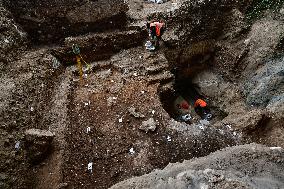
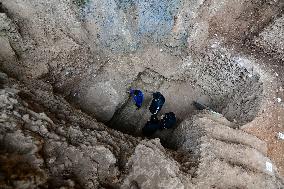
(240125) -- PUDING, Jan. 25, 2024 (Xinhua) -- Staff members conduct work at Chuandong Site in Puding County, southwest China's Guizhou Province, Jan. 24, 2024. Large quantities of artifacts made of stone, bone and horn have been unearthed at Chuandong Site in Puding County, southwest China's Guizhou Province, indicating prehistoric human activity dating back more than 55,000 years. Chuandong Site, first discovered in 1978, is believed to have existed across the end of the middle Paleolithic Period, the late Paleolithic Period and the Neolithic Age. Over two years of excavation work, the third one since 1978, researchers discovered a new soil layer at the site, where they found more than 100,000 animal bones, over 10,000 pieces of earthenware and stoneware, and more than 2,500 items made of bone or horn. (Xinhua/Yang Wenbin)

  •  
CHINA-GUIZHOU-PUDING-CHUANDONG SITE-NEW FINDING (CN)

CHINA-GUIZHOU-PUDING-CHUANDONG SITE-NEW FINDING (CN)

(240125) -- PUDING, Jan. 25, 2024 (Xinhua) -- An aerial drone photo taken on Jan. 24, 2024 shows a view of Chuandong Site in Puding County, southwest China's Guizhou Province. Large quantities of artifacts made of stone, bone and horn have been unearthed at Chuandong Site in Puding County, southwest China's Guizhou Province, indicating prehistoric human activity dating back more than 55,000 years. Chuandong Site, first discovered in 1978, is believed to have existed across the end of the middle Paleolithic Period, the late Paleolithic Period and the Neolithic Age. Over two years of excavation work, the third one since 1978, researchers discovered a new soil layer at the site, where they found more than 100,000 animal bones, over 10,000 pieces of earthenware and stoneware, and more than 2,500 items made of bone or horn. (Xinhua/Yang Wenbin)

  •  
CHINA-GUIZHOU-PUDING-CHUANDONG SITE-NEW FINDING (CN)

CHINA-GUIZHOU-PUDING-CHUANDONG SITE-NEW FINDING (CN)

(240125) -- PUDING, Jan. 25, 2024 (Xinhua) -- Staff members conduct work at Chuandong Site in Puding County, southwest China's Guizhou Province, Jan. 24, 2024. Large quantities of artifacts made of stone, bone and horn have been unearthed at Chuandong Site in Puding County, southwest China's Guizhou Province, indicating prehistoric human activity dating back more than 55,000 years. Chuandong Site, first discovered in 1978, is believed to have existed across the end of the middle Paleolithic Period, the late Paleolithic Period and the Neolithic Age. Over two years of excavation work, the third one since 1978, researchers discovered a new soil layer at the site, where they found more than 100,000 animal bones, over 10,000 pieces of earthenware and stoneware, and more than 2,500 items made of bone or horn. (Xinhua/Yang Wenbin)

  •  
CHINA-GUIZHOU-PUDING-CHUANDONG SITE-NEW FINDING (CN)

CHINA-GUIZHOU-PUDING-CHUANDONG SITE-NEW FINDING (CN)

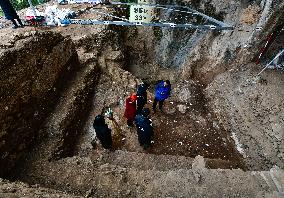
(240125) -- PUDING, Jan. 25, 2024 (Xinhua) -- Archaeological expert and students discuss at Chuandong Site in Puding County, southwest China's Guizhou Province, Jan. 24, 2024. Large quantities of artifacts made of stone, bone and horn have been unearthed at Chuandong Site in Puding County, southwest China's Guizhou Province, indicating prehistoric human activity dating back more than 55,000 years. Chuandong Site, first discovered in 1978, is believed to have existed across the end of the middle Paleolithic Period, the late Paleolithic Period and the Neolithic Age. Over two years of excavation work, the third one since 1978, researchers discovered a new soil layer at the site, where they found more than 100,000 animal bones, over 10,000 pieces of earthenware and stoneware, and more than 2,500 items made of bone or horn. (Xinhua/Yang Wenbin)

  •  
CHINA-GUIZHOU-PUDING-CHUANDONG SITE-NEW FINDING (CN)

CHINA-GUIZHOU-PUDING-CHUANDONG SITE-NEW FINDING (CN)

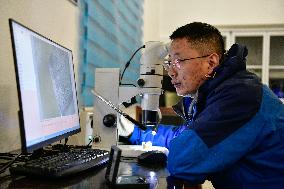
(240125) -- PUDING, Jan. 25, 2024 (Xinhua) -- Zhang Xinglong, an expert with the Guizhou provincial cultural relics and archaeology institute, examines archaeological samples unearthed from Chuandong Site under a microscope in Puding County, southwest China's Guizhou Province, Jan. 24, 2024. Large quantities of artifacts made of stone, bone and horn have been unearthed at Chuandong Site in Puding County, southwest China's Guizhou Province, indicating prehistoric human activity dating back more than 55,000 years. Chuandong Site, first discovered in 1978, is believed to have existed across the end of the middle Paleolithic Period, the late Paleolithic Period and the Neolithic Age. Over two years of excavation work, the third one since 1978, researchers discovered a new soil layer at the site, where they found more than 100,000 animal bones, over 10,000 pieces of earthenware and stoneware, and more than 2,500 items made of bone or horn. (Xinhua/Yang Wenbin)

  •  
CHINA-GUIZHOU-PUDING-CHUANDONG SITE-NEW FINDING (CN)

CHINA-GUIZHOU-PUDING-CHUANDONG SITE-NEW FINDING (CN)

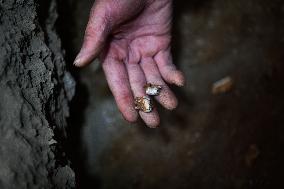
(240125) -- PUDING, Jan. 25, 2024 (Xinhua) -- A worker arranges findings unearthed from Chuandong Site in Puding County, southwest China's Guizhou Province, Jan. 24, 2024. Large quantities of artifacts made of stone, bone and horn have been unearthed at Chuandong Site in Puding County, southwest China's Guizhou Province, indicating prehistoric human activity dating back more than 55,000 years. Chuandong Site, first discovered in 1978, is believed to have existed across the end of the middle Paleolithic Period, the late Paleolithic Period and the Neolithic Age. Over two years of excavation work, the third one since 1978, researchers discovered a new soil layer at the site, where they found more than 100,000 animal bones, over 10,000 pieces of earthenware and stoneware, and more than 2,500 items made of bone or horn. (Xinhua/Yang Wenbin)

  •  
CHINA-GUIZHOU-PUDING-CHUANDONG SITE-NEW FINDING (CN)

CHINA-GUIZHOU-PUDING-CHUANDONG SITE-NEW FINDING (CN)

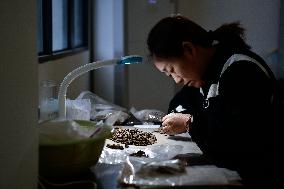
(240125) -- PUDING, Jan. 25, 2024 (Xinhua) -- A staff member sorts findings unearthed from Chuandong Site at a work site of the Guizhou provincial cultural relics and archaeology institute in Puding County, southwest China's Guizhou Province, Jan. 24, 2024. Large quantities of artifacts made of stone, bone and horn have been unearthed at Chuandong Site in Puding County, southwest China's Guizhou Province, indicating prehistoric human activity dating back more than 55,000 years. Chuandong Site, first discovered in 1978, is believed to have existed across the end of the middle Paleolithic Period, the late Paleolithic Period and the Neolithic Age. Over two years of excavation work, the third one since 1978, researchers discovered a new soil layer at the site, where they found more than 100,000 animal bones, over 10,000 pieces of earthenware and stoneware, and more than 2,500 items made of bone or horn. (Xinhua/Yang Wenbin)

  •  
CHINA-GUIZHOU-PUDING-CHUANDONG SITE-NEW FINDING (CN)

CHINA-GUIZHOU-PUDING-CHUANDONG SITE-NEW FINDING (CN)

(240125) -- PUDING, Jan. 25, 2024 (Xinhua) -- Archaeological expert and students discuss at Chuandong Site in Puding County, southwest China's Guizhou Province, Jan. 24, 2024. Large quantities of artifacts made of stone, bone and horn have been unearthed at Chuandong Site in Puding County, southwest China's Guizhou Province, indicating prehistoric human activity dating back more than 55,000 years. Chuandong Site, first discovered in 1978, is believed to have existed across the end of the middle Paleolithic Period, the late Paleolithic Period and the Neolithic Age. Over two years of excavation work, the third one since 1978, researchers discovered a new soil layer at the site, where they found more than 100,000 animal bones, over 10,000 pieces of earthenware and stoneware, and more than 2,500 items made of bone or horn. (Xinhua/Yang Wenbin)

  •  
CHINA-GUIZHOU-CHUANDONG SITE-PREHISTORIC HUMAN ACTIVITY-DISCOVERY (CN)

CHINA-GUIZHOU-CHUANDONG SITE-PREHISTORIC HUMAN ACTIVITY-DISCOVERY (CN)

(240117) -- GUIYANG, Jan. 17, 2024 (Xinhua) -- This undated file photo shows a fossil of a Neoanthropus Homo sapiens sapiens molar tooth unearthed at the Chuandong Site in Puding County, southwest China's Guizhou Province. Large quantities of artifacts made of stone, bone and horn have been unearthed at Chuandong Site in Puding County, southwest China's Guizhou Province, indicating prehistoric human activity dating back more than 55,000 years. TO GO WITH "New finds in China's Guizhou indicate prehistoric human activity over 55,000 years ago" (Xinhua)

  •  
CHINA-GUIZHOU-CHUANDONG SITE-PREHISTORIC HUMAN ACTIVITY-DISCOVERY (CN)

CHINA-GUIZHOU-CHUANDONG SITE-PREHISTORIC HUMAN ACTIVITY-DISCOVERY (CN)

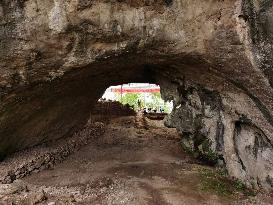
(240117) -- GUIYANG, Jan. 17, 2024 (Xinhua) -- This undated file photo shows the Chuandong Site in Puding County, southwest China's Guizhou Province. Large quantities of artifacts made of stone, bone and horn have been unearthed at Chuandong Site in Puding County, southwest China's Guizhou Province, indicating prehistoric human activity dating back more than 55,000 years. TO GO WITH "New finds in China's Guizhou indicate prehistoric human activity over 55,000 years ago" (Xinhua)

  •  
CHINA-GUIZHOU-CHUANDONG SITE-PREHISTORIC HUMAN ACTIVITY-DISCOVERY (CN)

CHINA-GUIZHOU-CHUANDONG SITE-PREHISTORIC HUMAN ACTIVITY-DISCOVERY (CN)

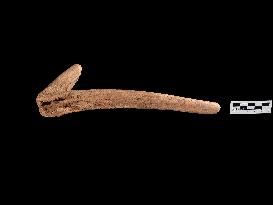
(240117) -- GUIYANG, Jan. 17, 2024 (Xinhua) -- This undated file photo shows a horn artifact unearthed at the Chuandong Site in Puding County, southwest China's Guizhou Province. Large quantities of artifacts made of stone, bone and horn have been unearthed at Chuandong Site in Puding County, southwest China's Guizhou Province, indicating prehistoric human activity dating back more than 55,000 years. TO GO WITH "New finds in China's Guizhou indicate prehistoric human activity over 55,000 years ago" (Xinhua)

  •  
CHINA-GUIZHOU-CHUANDONG SITE-PREHISTORIC HUMAN ACTIVITY-DISCOVERY (CN)

CHINA-GUIZHOU-CHUANDONG SITE-PREHISTORIC HUMAN ACTIVITY-DISCOVERY (CN)

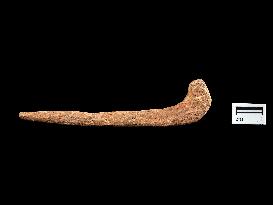
(240117) -- GUIYANG, Jan. 17, 2024 (Xinhua) -- This undated file photo shows a bone fishhook unearthed at the Chuandong Site in Puding County, southwest China's Guizhou Province. Large quantities of artifacts made of stone, bone and horn have been unearthed at Chuandong Site in Puding County, southwest China's Guizhou Province, indicating prehistoric human activity dating back more than 55,000 years. TO GO WITH "New finds in China's Guizhou indicate prehistoric human activity over 55,000 years ago" (Xinhua)

  •  
NAMIBIA-DESERT ELEPHANTS-SURVIVAL

NAMIBIA-DESERT ELEPHANTS-SURVIVAL

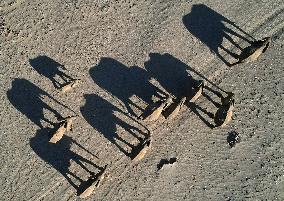
(230613) -- WINDHOEK, June 13, 2023 (Xinhua) -- This aerial photo taken on Feb. 9, 2023 shows a group of desert elephants walking at the Hoanib River drainage in northern Namibia. Desert elephants from the arid lands of Kunene Region in northern Namibia are battling for their survival as a combination of human-caused mortality, which accounts for over half of the adult deaths, and a distressing lack of successful calf survival plunges their population into a critical state. TO GO WITH "Human activity threatens survival of desert elephants in Namibia: study" (Xinhua/Chen Cheng)

  •  
NAMIBIA-DESERT ELEPHANTS-SURVIVAL

NAMIBIA-DESERT ELEPHANTS-SURVIVAL

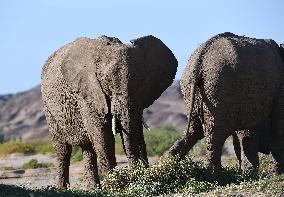
(230613) -- WINDHOEK, June 13, 2023 (Xinhua) -- This photo taken on Feb. 8, 2023 shows two desert elephants walking at the Hoanib River drainage in northern Namibia. Desert elephants from the arid lands of Kunene Region in northern Namibia are battling for their survival as a combination of human-caused mortality, which accounts for over half of the adult deaths, and a distressing lack of successful calf survival plunges their population into a critical state. TO GO WITH "Human activity threatens survival of desert elephants in Namibia: study" (Xinhua/Chen Cheng)

  •  
NAMIBIA-DESERT ELEPHANTS-SURVIVAL

NAMIBIA-DESERT ELEPHANTS-SURVIVAL

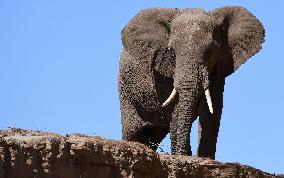
(230613) -- WINDHOEK, June 13, 2023 (Xinhua) -- This photo taken on Feb. 8, 2023 shows a desert elephant walking at the Hoanib River drainage in northern Namibia. Desert elephants from the arid lands of Kunene Region in northern Namibia are battling for their survival as a combination of human-caused mortality, which accounts for over half of the adult deaths, and a distressing lack of successful calf survival plunges their population into a critical state. TO GO WITH "Human activity threatens survival of desert elephants in Namibia: study" (Xinhua/Chen Cheng)

  •  
Hitachi develops portable apparatus to measure brain activity

Hitachi develops portable apparatus to measure brain activity

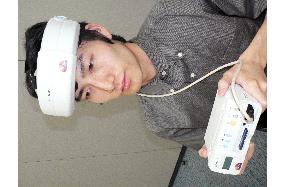
TOKYO, Japan - Electrical machinery maker Hitachi Ltd. unveils a portable apparatus for measuring brain activity to help research the relation between human acts and brain changes at a press conference in Tokyo on May 22. The apparatus, weighing only 1 kilogram, is far smaller than a conventional encephalometer and can be worn by children to collect brain data even when they are outside the laboratory, the company said.

  •  

A glimpse of Alashan Desert Tianchi Scenic Area in N China

STORY: A glimpse of Alashan Desert Tianchi Scenic Area in N China DATELINE: July 26, 2022 LENGTH: 00:00:59 LOCATION: HOHHOT, China CATEGORY: ENVIRONMENT SHOTLIST: 1. various of Alashan Desert Tianchi Scenic Area in China's Inner Mongolia STORYLINE: The Tianchi Scenic Area of Alashan Desert is located in Alashan League, north China's Inner Mongolia Autonomous Region. The tourist spot is at the intersection of Tengger Desert and Badain Jaran Desert. In addition to its unique natural scenery, the scenic area in Alashan Desert still preserves the sites of ancient human activity, including ancient hunting grounds and caves. Xinhua News Agency correspondents reporting from Hohhot, China. (XHTV)

  •  

Organ donors remembered in China's Ningxia as Tomb-sweeping Day approaches

STORY: Organ donors remembered in China's Ningxia as Tomb-sweeping Day approaches DATELINE: March 31, 2022 LENGTH: 0:01:48 LOCATION: YINCHUAN, China CATEGORY: SOCIETY/HEALTH SHOTLIST: 1. various of the memorial activity 2. SOUNDBITE 1 (Chinese): DONG LE, Cornea donor's father 3. SOUNDBITE 2 (Chinese): TAO JUN, Director of Ningxia Human Organ Donation Service Center STORYLINE: As Tomb-sweeping Day approaches, a memorial was held at a cemetery in Yinchuan, northwest China's Ningxia Hui Autonomous Region, to honor organ donors. Among them is an 8-year-old cornea donor who was buried here on the day. SOUNDBITE 1 (Chinese): DONG LE, Cornea donor's father "My 8-year-old suffered from sudden cerebrovascular malformation. After two days of rescue, unfortunately, she was gone. My wife and I decided to donate her corneas to help people in need. May more children grow healthily and stay away from accidents." SOUNDBITE 2 (Chinese): TAO JUN, Director of Ningxia Human Organ Donation Service Center "We hold memorials

  •  

Chinese company protects wildlife while building hotels in Tanzania

STORY: Chinese company protects wildlife while building hotels in Tanzania DATELINE: March 3, 2022 LENGTH: 00:02:06 LOCATION: DAR ES SALAAM, Tanzania CATEGORY: ENVIRONMENT SHOTLIST: 1. SOUNDBITE (Chinese): ZHANG CUISHAN, General Manager of Tanzania Branch of China Railway Jianchang Engineering Company (CRJE) 2. Various shots of animals on the prairie 3. Various shots of local Maasai 4. Drone shots of hotel construction site 5. Various shots of Zhang Cuishan's office scene STORYLINE: At a hotel in Tanzania's Serengeti National Park, Zhang Cuishan was checking the status of the project. Not far behind him, a herd of elephants was drinking leisurely at the edge of a pond, oblivious to human activity. This is the photo Zhang left when the hotel was just completed. The hotel, built by Zhang, has become a popular tourism attraction. "Building hotels in Africa has given me a deeper understanding of the relationship between man and nature," Zhang told Xinhua before the World Wildlife Day tha

  •  
Hitachi develops portable apparatus to measure brain activity

Hitachi develops portable apparatus to measure brain activity

TOKYO, Japan - Electrical machinery maker Hitachi Ltd. unveils a portable apparatus for measuring brain activity to help research the relation between human acts and brain changes at a press conference in Tokyo on May 22. The apparatus, weighing only 1 kilogram, is far smaller than a conventional encephalometer and can be worn by children to collect brain data even when they are outside the laboratory, the company said. (Kyodo)

  •  
a plaque in memory of the Czech-British cooperation in secret home seminars

a plaque in memory of the Czech-British cooperation in secret home seminars

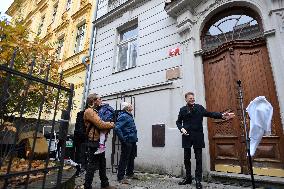
British Ambassador Nick Archer unveiled a plaque in memory of the Czech-British cooperation in secret home seminars called underground university during the communist regime in Czechoslovakia on a house in Prague-Letna today, on Thursday, November 14, 2019. British academics and Czech dissidents who participated in this activity, which enabled banned teachers to give lectures, also attend the ceremony. The underground university based on secret home seminars was launched by philosopher Jan Patocka, the first spokesman for the Charter 77 human rights manifesto and movement, when he was fired from Charles University in Prague. After his death as a consequence of communist police interrogations, Julius Tomin assumed the initiative. At the end of 1978, he sent a request for aid and cooperation to Oxford University. (CTK Photo/Michal Kamaryt)

  •  
Nick Archer, Julius Tomin, Marek Tomin, a plaque in memory of the Czech-British cooperation in secret home seminars

Nick Archer, Julius Tomin, Marek Tomin, a plaque in memory of the Czech-British cooperation in secret home seminars

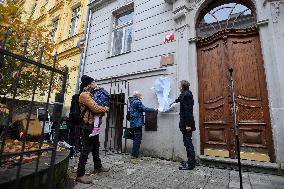
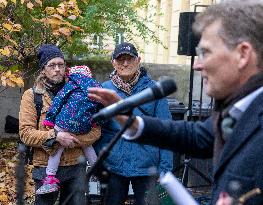
British Ambassador Nick Archer (right) unveiled a plaque in memory of the Czech-British cooperation in secret home seminars called underground university during the communist regime in Czechoslovakia on a house in Prague-Letna today, on Thursday, November 14, 2019. British academics and Czech dissidents who participated in this activity, which enabled banned teachers to give lectures, also attend the ceremony. The underground university based on secret home seminars was launched by philosopher Jan Patocka, the first spokesman for the Charter 77 human rights manifesto and movement, when he was fired from Charles University in Prague. After his death as a consequence of communist police interrogations, Julius Tomin (centre, accompanied by Marek Tomin) assumed the initiative. At the end of 1978, he sent a request for aid and cooperation to Oxford University. (CTK Photo/Michal Kamaryt)

  •  
Nick Archer, Julius Tomin, Marek Tomin, a plaque in memory of the Czech-British cooperation in secret home seminars

Nick Archer, Julius Tomin, Marek Tomin, a plaque in memory of the Czech-British cooperation in secret home seminars

British Ambassador Nick Archer (right) unveiled a plaque in memory of the Czech-British cooperation in secret home seminars called underground university during the communist regime in Czechoslovakia on a house in Prague-Letna today, on Thursday, November 14, 2019. British academics and Czech dissidents who participated in this activity, which enabled banned teachers to give lectures, also attend the ceremony. The underground university based on secret home seminars was launched by philosopher Jan Patocka, the first spokesman for the Charter 77 human rights manifesto and movement, when he was fired from Charles University in Prague. After his death as a consequence of communist police interrogations, Julius Tomin (centre, accompanied by Marek Tomin) assumed the initiative. At the end of 1978, he sent a request for aid and cooperation to Oxford University. (CTK Photo/Michal Kamaryt)

  •  
Nick Archer, Alexandr Vondra

Nick Archer, Alexandr Vondra

British Ambassador Nick Archer (on the photo left speaking with MEP Alexandr Vondra) unveiled a plaque in memory of the Czech-British cooperation in secret home seminars called underground university during the communist regime in Czechoslovakia on a house in Prague-Letna today, on Thursday, November 14, 2019. British academics and Czech dissidents who participated in this activity, which enabled banned teachers to give lectures, also attend the ceremony. The underground university based on secret home seminars was launched by philosopher Jan Patocka, the first spokesman for the Charter 77 human rights manifesto and movement, when he was fired from Charles University in Prague. After his death as a consequence of communist police interrogations, Julius Tomin assumed the initiative. At the end of 1978, he sent a request for aid and cooperation to Oxford University. (CTK Photo/Michal Kamaryt)

  •  
Julius Tomin, Vaclav Hampl

Julius Tomin, Vaclav Hampl

British Ambassador Nick Archer unveiled a plaque in memory of the Czech-British cooperation in secret home seminars called underground university during the communist regime in Czechoslovakia on a house in Prague-Letna today, on Thursday, November 14, 2019. British academics and Czech dissidents who participated in this activity, which enabled banned teachers to give lectures, also attend the ceremony. The underground university based on secret home seminars was launched by philosopher Jan Patocka, the first spokesman for the Charter 77 human rights manifesto and movement, when he was fired from Charles University in Prague. After his death as a consequence of communist police interrogations, Julius Tomin (on the photo left discuss with senator Vaclav Hampl) assumed the initiative. At the end of 1978, he sent a request for aid and cooperation to Oxford University. (CTK Photo/Michal Kamaryt)

  •  
a plaque in memory of the Czech-British cooperation in secret home seminars

a plaque in memory of the Czech-British cooperation in secret home seminars

British Ambassador Nick Archer unveiled a plaque in memory of the Czech-British cooperation in secret home seminars called underground university during the communist regime in Czechoslovakia on a house in Prague-Letna today, on Thursday, November 14, 2019. British academics and Czech dissidents who participated in this activity, which enabled banned teachers to give lectures, also attend the ceremony. The underground university based on secret home seminars was launched by philosopher Jan Patocka, the first spokesman for the Charter 77 human rights manifesto and movement, when he was fired from Charles University in Prague. After his death as a consequence of communist police interrogations, Julius Tomin assumed the initiative. At the end of 1978, he sent a request for aid and cooperation to Oxford University. (CTK Photo/Petr Mlch)

  •  
Julius Tomin

Julius Tomin

British Ambassador Nick Archer unveiled a plaque in memory of the Czech-British cooperation in secret home seminars called underground university during the communist regime in Czechoslovakia on a house in Prague-Letna today, on Thursday, November 14, 2019. British academics and Czech dissidents who participated in this activity, which enabled banned teachers to give lectures, also attend the ceremony. The underground university based on secret home seminars was launched by philosopher Jan Patocka, the first spokesman for the Charter 77 human rights manifesto and movement, when he was fired from Charles University in Prague. After his death as a consequence of communist police interrogations, Julius Tomin (photo) assumed the initiative. At the end of 1978, he sent a request for aid and cooperation to Oxford University. (CTK Photo/Michal Kamaryt)

  •  
Nick Archer, Julius Tomin, Marek Tomin, a plaque in memory of the Czech-British cooperation in secret home seminars

Nick Archer, Julius Tomin, Marek Tomin, a plaque in memory of the Czech-British cooperation in secret home seminars

British Ambassador Nick Archer (right) unveiled a plaque in memory of the Czech-British cooperation in secret home seminars called underground university during the communist regime in Czechoslovakia on a house in Prague-Letna today, on Thursday, November 14, 2019. British academics and Czech dissidents who participated in this activity, which enabled banned teachers to give lectures, also attend the ceremony. The underground university based on secret home seminars was launched by philosopher Jan Patocka, the first spokesman for the Charter 77 human rights manifesto and movement, when he was fired from Charles University in Prague. After his death as a consequence of communist police interrogations, Julius Tomin (centre, accompanied by Marek Tomin) assumed the initiative. At the end of 1978, he sent a request for aid and cooperation to Oxford University. (CTK Photo/Petr Mlch)

  •  
Dana Nemcova, Alexandr Vondra, a plaque in memory of the Czech-British cooperation in secret home seminars

Dana Nemcova, Alexandr Vondra, a plaque in memory of the Czech-British cooperation in secret home seminars

British Ambassador Nick Archer unveiled a plaque in memory of the Czech-British cooperation in secret home seminars called underground university during the communist regime in Czechoslovakia on a house in Prague-Letna today, on Thursday, November 14, 2019. British academics and Czech dissidents (on the photo Dana Nemcova, centre, speaks with Alexandr Vondra, left) who participated in this activity, which enabled banned teachers to give lectures, also attend the ceremony. The underground university based on secret home seminars was launched by philosopher Jan Patocka, the first spokesman for the Charter 77 human rights manifesto and movement, when he was fired from Charles University in Prague. After his death as a consequence of communist police interrogations, Julius Tomin assumed the initiative. At the end of 1978, he sent a request for aid and cooperation to Oxford University. (CTK Photo/Petr Mlch)

  •  
Nick Archer, a plaque in memory of the Czech-British cooperation in secret home seminars

Nick Archer, a plaque in memory of the Czech-British cooperation in secret home seminars

British Ambassador Nick Archer unveiled a plaque in memory of the Czech-British cooperation in secret home seminars called underground university during the communist regime in Czechoslovakia on a house in Prague-Letna today, on Thursday, November 14, 2019. British academics and Czech dissidents who participated in this activity, which enabled banned teachers to give lectures, also attend the ceremony. The underground university based on secret home seminars was launched by philosopher Jan Patocka, the first spokesman for the Charter 77 human rights manifesto and movement, when he was fired from Charles University in Prague. After his death as a consequence of communist police interrogations, Julius Tomin assumed the initiative. At the end of 1978, he sent a request for aid and cooperation to Oxford University. (CTK Photo/Petr Mlch)

  •  
Nick Archer, a plaque in memory of the Czech-British cooperation in secret home seminars

Nick Archer, a plaque in memory of the Czech-British cooperation in secret home seminars

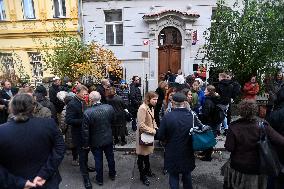
British Ambassador Nick Archer (centre) unveiled a plaque in memory of the Czech-British cooperation in secret home seminars called underground university during the communist regime in Czechoslovakia on a house in Prague-Letna today, on Thursday, November 14, 2019. British academics and Czech dissidents who participated in this activity, which enabled banned teachers to give lectures, also attend the ceremony. The underground university based on secret home seminars was launched by philosopher Jan Patocka, the first spokesman for the Charter 77 human rights manifesto and movement, when he was fired from Charles University in Prague. After his death as a consequence of communist police interrogations, Julius Tomin assumed the initiative. At the end of 1978, he sent a request for aid and cooperation to Oxford University. (CTK Photo/Petr Mlch)

  • Main
  • Top
  • Editorial
  • Creative
  • About Us
  • About ILG
  • Terms of use
  • Company
  • BEHIND
  • Price List
  • Single Plan
  • Monthly Plan
  • Services
  • Shooting
  • Rights Clearance
  • Support
  • FAQ
  • How To Buy
  • Contact Us
  • Become a Partner

© KYODO NEWS IMAGES INC

All Rights Reserved.

  • Editorial
  • Olympics
  • News
  • Sports
  • Japan
  • Tech
  • Royal
  • Disaster
  • NorthKorea
  • Old Japan
  • SNS

  • Creative
  • Food
  • Japan
  • Landscape
  • Animal
  • Popular
  • #Ukraine
  • #Russia
  • #coronavirus
  • #N. Korea
  • #China
  • #Thailand
  • #Ukraine
  • #Russia
  • #coronavirus
  • #N. Korea
  • #China
  • #Thailand
  • Food
  • Japan
  • Landscape
  • Animal
  • Olympics
  • News
  • Sports
  • Japan
  • Tech
  • Royal
  • Disaster
  • NorthKorea
  • Old Japan
  • SNS